DevFlow — Developer Productivity Platform
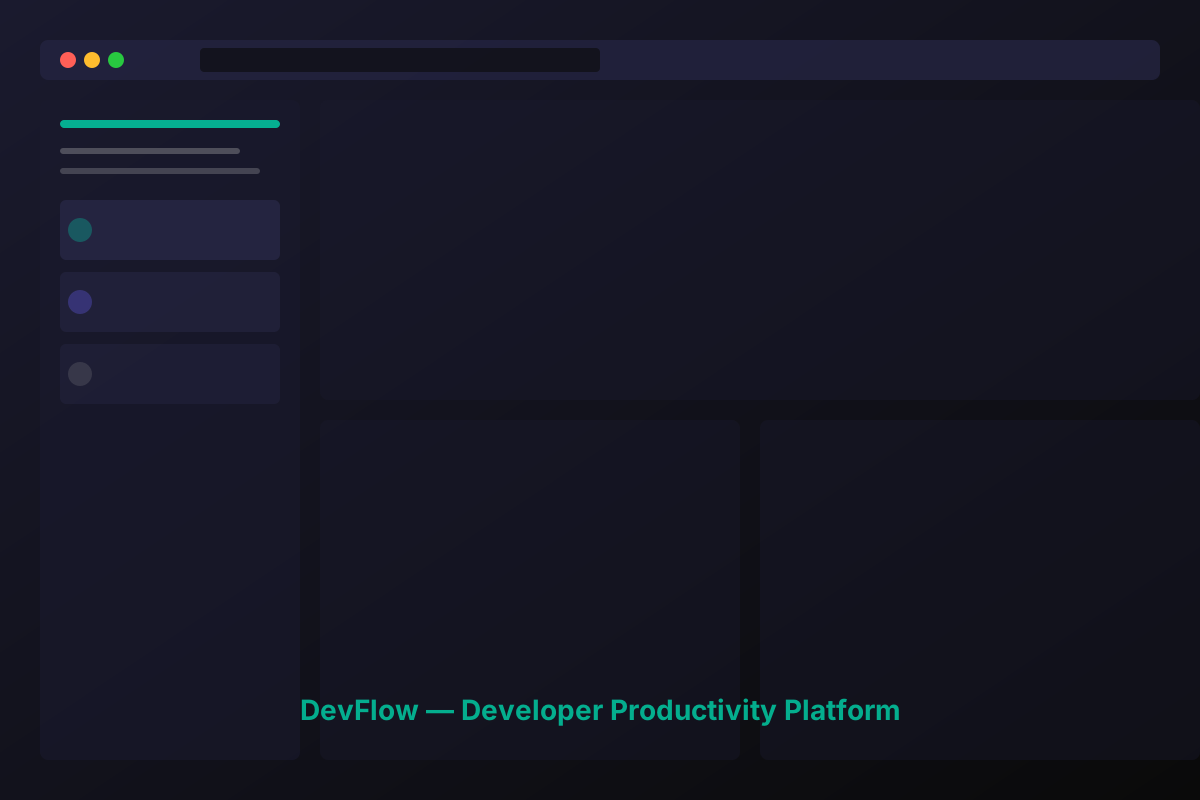
A full-stack SaaS platform that unifies pull request reviews, CI status, and deployment tracking into a single developer dashboard.
The Problem
Engineering teams at fast-growing startups spend an enormous amount of context-switching time — jumping between GitHub for PRs, Datadog for metrics, and Slack for deployment alerts. I watched engineers at my company lose 30-45 minutes per day to this overhead. We needed a single pane of glass.
My Approach
I started by interviewing 8 engineers to map their actual workflow, not the idealized one. The consistent pain points: (1) missed PR reviews due to notification overload, (2) no easy way to see which PRs were blocking deploys, and (3) no historical view of team velocity.
I chose a Next.js App Router architecture with server-side rendering for near-instant page loads, PostgreSQL for relational data integrity (PRs, reviews, comments all have complex relationships), and a webhook-based ingestion layer to handle events from GitHub, CircleCI, and Vercel in real time.
What I Built
The platform has three core modules:
Review Queue — Automatically surfaces PRs that need your attention, ranked by staleness and blocking status. Color-coded by urgency. Deep links to specific review threads.
Pipeline View — Unified CI/CD status across repos. One click to see failing jobs, affected tests, and deployment blockers. Integrated Slack notifications with smart deduplication.
Team Velocity — Week-over-week charts for PR cycle time, review response time, and deploy frequency. Exportable to CSV for sprint retrospectives.
Results
- 10,000+ users across 200+ engineering teams within 12 months of launch
- Average reported time savings: 28 minutes per developer per day
- 4.8/5 average user rating on Product Hunt (launched #3 product of the day)
- PR cycle time reduced by average 35% for teams that adopted the Review Queue
Key Learnings
Real-time webhook handling at scale is harder than it looks — we had to implement idempotency keys and dead-letter queues to handle GitHub’s inconsistent delivery guarantees. I’d implement an event sourcing pattern from day one on the next version, rather than retrofitting it later.